
Jokes are one of the easiest and most powerful ways to entertain people, reduce stress, and create connections, and using the right joke format makes them even funnier and more effective because a well-structured joke delivers the punchline at the perfect moment, keeps the audience engaged, and increases the chances of laughter whether you are sharing jokes in conversation, writing content, or posting on social media platforms.
Understanding What Makes a Joke Funny
A joke becomes funny when it surprises the audience in an unexpected way. Most jokes follow a simple structure: setup and punchline. The setup builds expectation, while the punchline breaks that expectation in a surprising or clever way.
Timing and delivery also play a major role in humor. Even a simple joke can become hilarious if told at the right moment with the right tone. On the other hand, a good joke can fail if the delivery is weak or rushed.
Classic Setup and Punchline Format
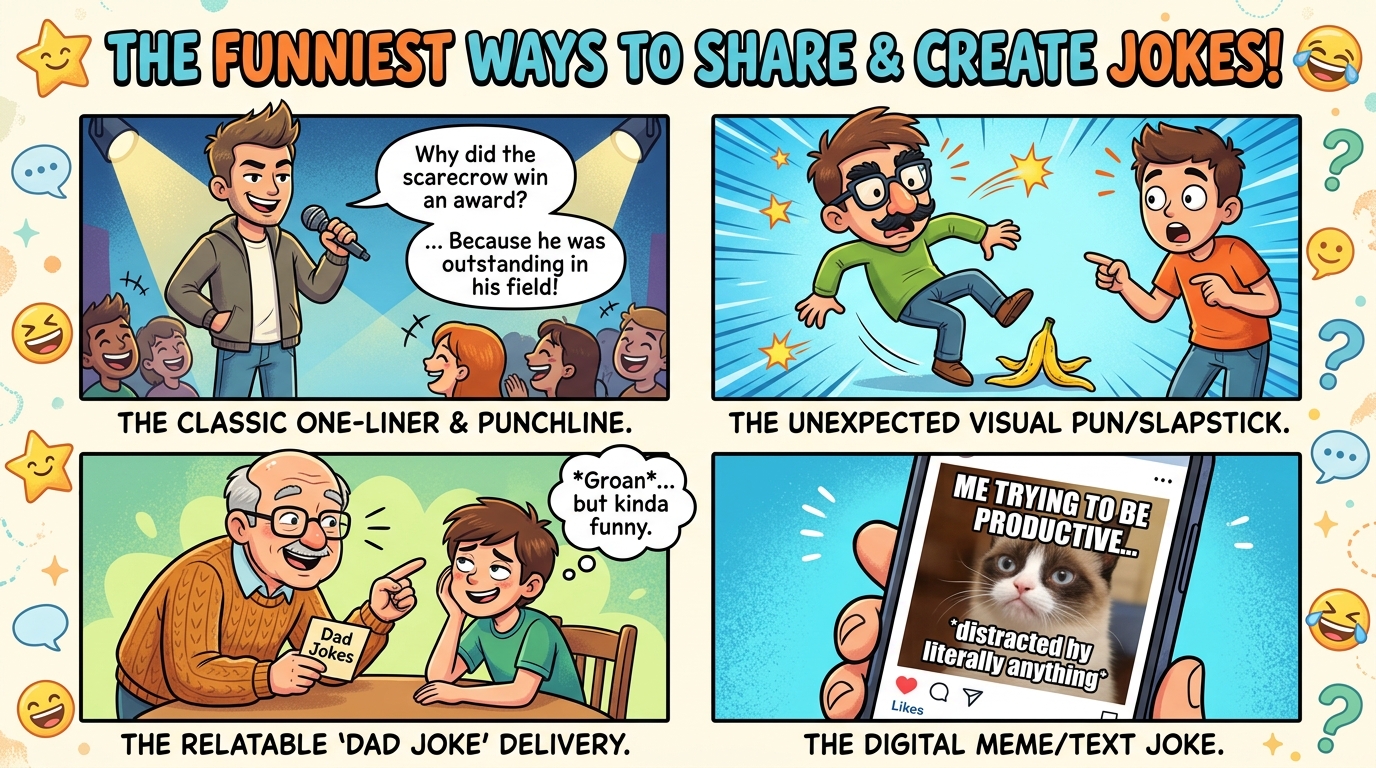
The most common joke format is the setup and punchline structure. In this format, the first line creates a situation or expectation, and the second line delivers the twist that makes it funny.
This format works well because it is simple and easy to understand. For example, short jokes, stand-up comedy lines, and even memes often follow this structure. It is ideal for beginners who want to start creating jokes.
One-Liner Jokes for Quick Humor
One-liner jokes are short and direct, usually consisting of a single sentence. These jokes are popular because they are quick to read and easy to share, especially on social media platforms.
The key to a good one-liner is creativity and wordplay. Since there is no long setup, the humor must come instantly. This format is widely used in captions, tweets, and quick conversations.
Question and Answer Joke Format
Question and answer jokes are another popular format where a question is asked, and the answer delivers the humor. This type of joke is simple and effective, especially for beginners.
This format works well because it creates curiosity. The listener expects a logical answer, but instead gets a funny or unexpected response. It is commonly used in kids’ jokes and casual humor.
Story-Based Jokes for Deeper Humor
Story-based jokes involve a short narrative that builds up to a funny ending. These jokes take more time to tell but can be more rewarding because they create a stronger emotional connection with the audience.
This format is often used in stand-up comedy and storytelling. The humor comes from the situation, characters, and final twist, making it more engaging than shorter joke formats.
Meme and Visual Joke Format
In the digital age, memes have become one of the most popular ways to share jokes. This format combines images with short text to create humor that is easy to understand and highly shareable.
Visual jokes work well because they communicate ideas quickly. A simple image with a relatable caption can make people laugh instantly, especially when it reflects real-life situations.
Relatable Humor for Modern Audiences
Relatable jokes are based on everyday experiences that people can easily connect with. These jokes are very effective because they make the audience feel understood.
For example, jokes about school, work, or daily struggles often perform well because they reflect common experiences. This type of humor is widely used in social media content and online communities.
Tips for Creating Funny Jokes
Creating funny jokes requires creativity and observation. One of the best ways to start is by noticing small, funny details in everyday life and turning them into humor.
It is also important to keep jokes simple and clear. Overcomplicating a joke can reduce its impact. Testing jokes with friends or small audiences can help improve timing and delivery.
Common Mistakes to Avoid in Joke Writing
One common mistake is explaining the joke too much. If a joke needs explanation, it usually loses its humor. The punchline should be clear and easy to understand.
Another mistake is copying jokes instead of creating original content. While inspiration is helpful, originality makes jokes more unique and engaging for the audience.
FAQ’s
What is a joke format
A joke format is the structure used to create and deliver a joke, such as setup and punchline or question and answer.
Which joke format is best for beginners
The setup and punchline format is the easiest and most effective for beginners.
Can I create jokes easily
Yes, with practice and creativity, anyone can learn to create jokes.
Why are short jokes popular
Short jokes are quick, easy to understand, and perfect for sharing online.
Conclusion
Joke formats play a key role in making humor effective and enjoyable. Whether it is a simple one-liner, a question-answer joke, or a story-based format, the right structure helps deliver the punchline perfectly. By understanding different formats and practicing regularly, anyone can create and share funny jokes that entertain and connect with people.